
Preface
Starting college or university is a very exciting experience, especially as many students move out of their parents’ homes for the first time. However, with the rise of bed bugs across Toronto, it is extremely important to exercise caution when moving into student housing or nearby rental units. These places experience extremely high tenant turnover rates (housing near U of T, TMU, York University, and other colleges see new move-ins every semester), making them one of the leading causes of the spread of bed bugs across Toronto and the Greater Toronto Area.
As Toronto bed bug exterminators and experts, we consider it our responsibility to not only eradicate bed bugs in our customers’ homes but also educate all Toronto and GTA residents on how to prevent their spread. In this article, you will find a guide to follow before moving into your student housing to ensure you do not end up dealing with bed bugs.
Let’s learn how bed bugs spread in student housing
Bed bugs feed on human blood and are nocturnal creatures. This means that they mainly exist on furniture and in areas we rest or sleep on, such as our beds and couches. If an infestation has existed for a while, it is common to also find bed bugs lingering on clothes, other furniture items, carpets/rugs and even baseboards.
Thus, when buying used furniture items, especially beds, mattresses, box springs, and couches, it is extremely important to inspect them, and before moving into an apartment or room, to inspect any existing furniture and carpets.
Inspect existing/used furniture items
Before committing to your new place, inspect all existing furniture for signs of bed bugs. If you do not have a choice, as is often the case with on-campus housing, inspect the room thoroughly before bringing in your belongings.
What you are looking for:
- Any live bugs: bed bugs range from 1mm-5mm in size, translucent to red-ish brown in colour
- Fecal matter: this is bed bug poop and looks like small black ink spots
- Eggs: these are 1mm in size, white in colour and oval shaped. They are found in clusters and are often hard and cemented
- Bed bug exoskeleton: shaped like bed bugs, translucent and hollow
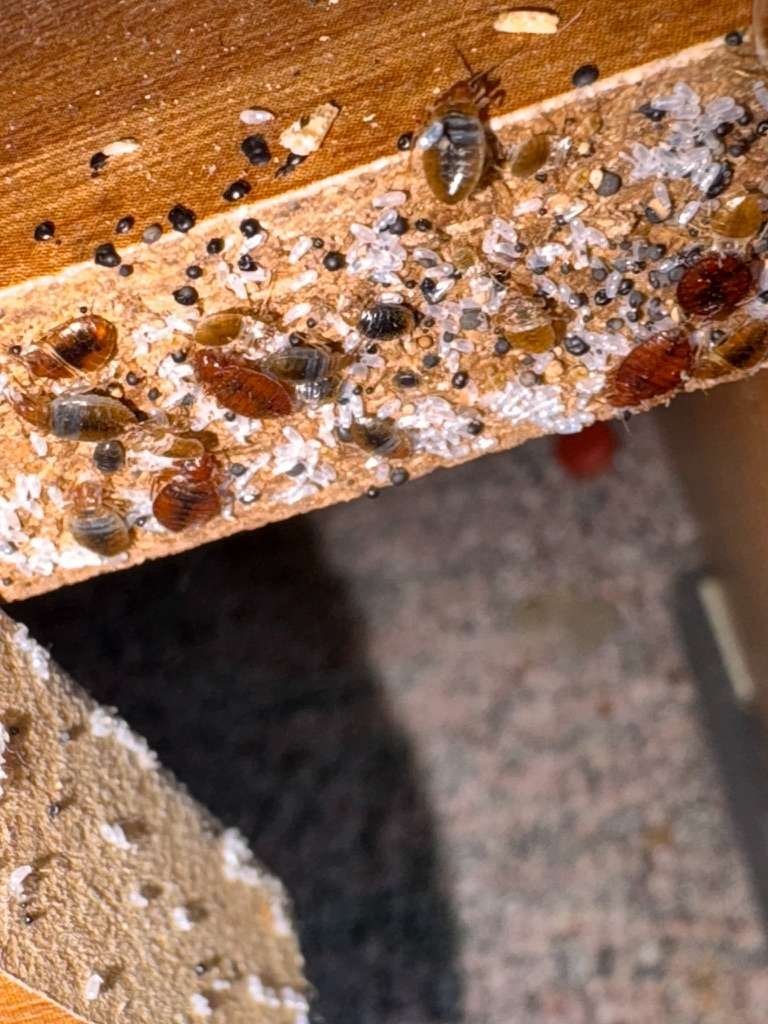
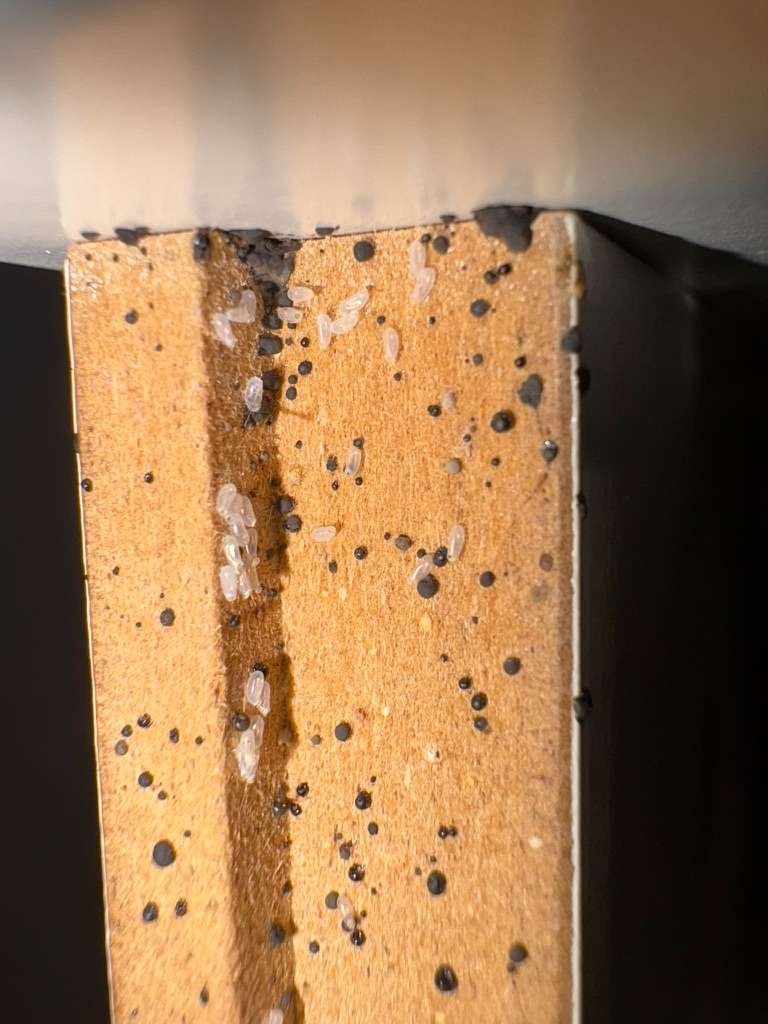
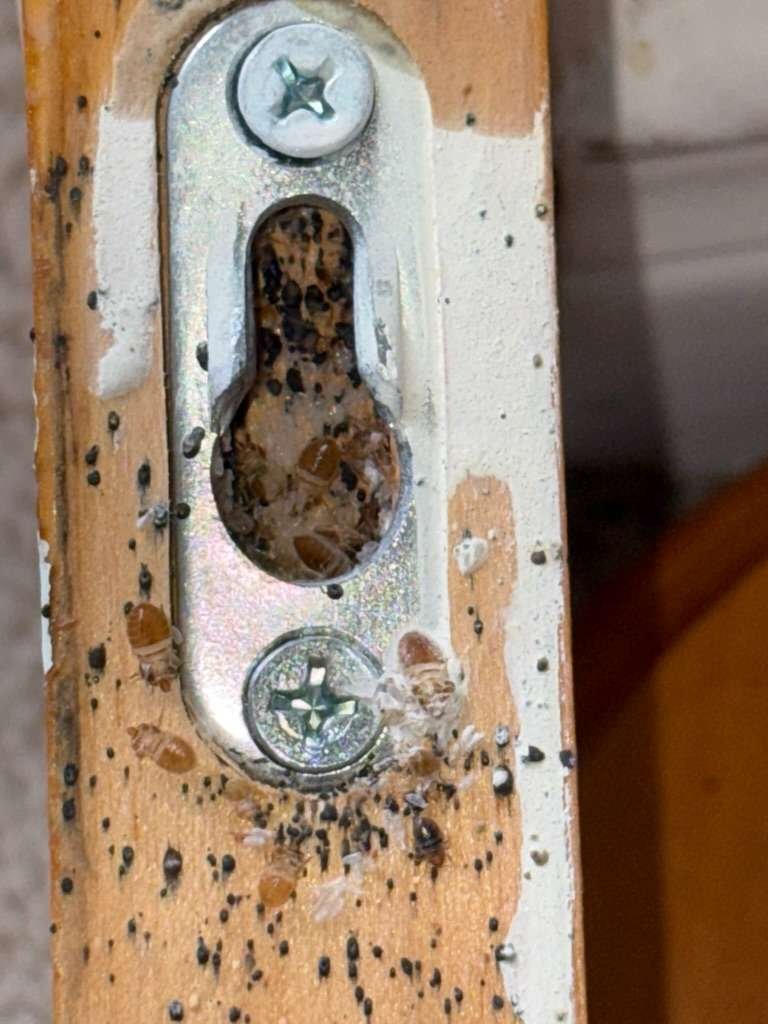
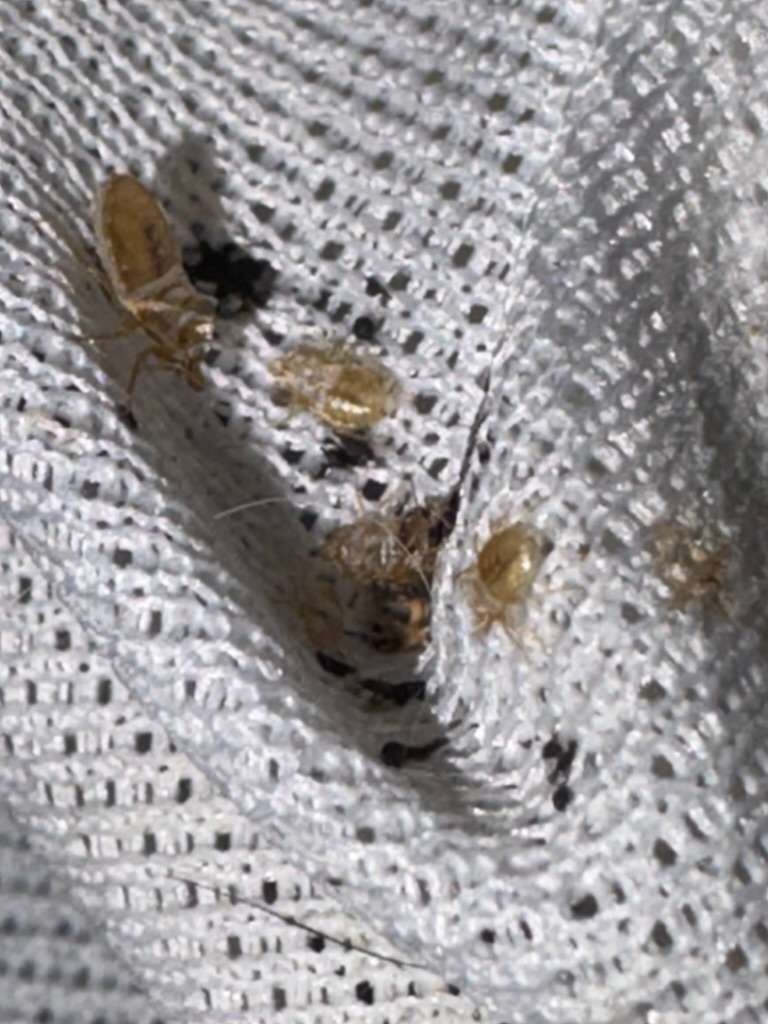
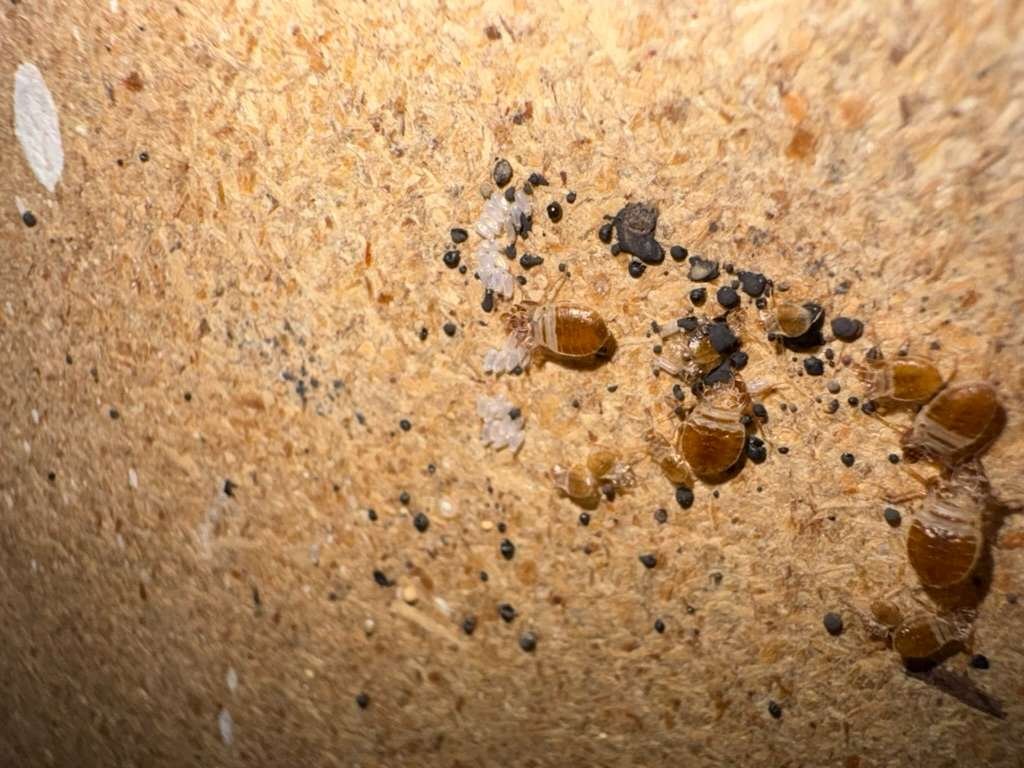
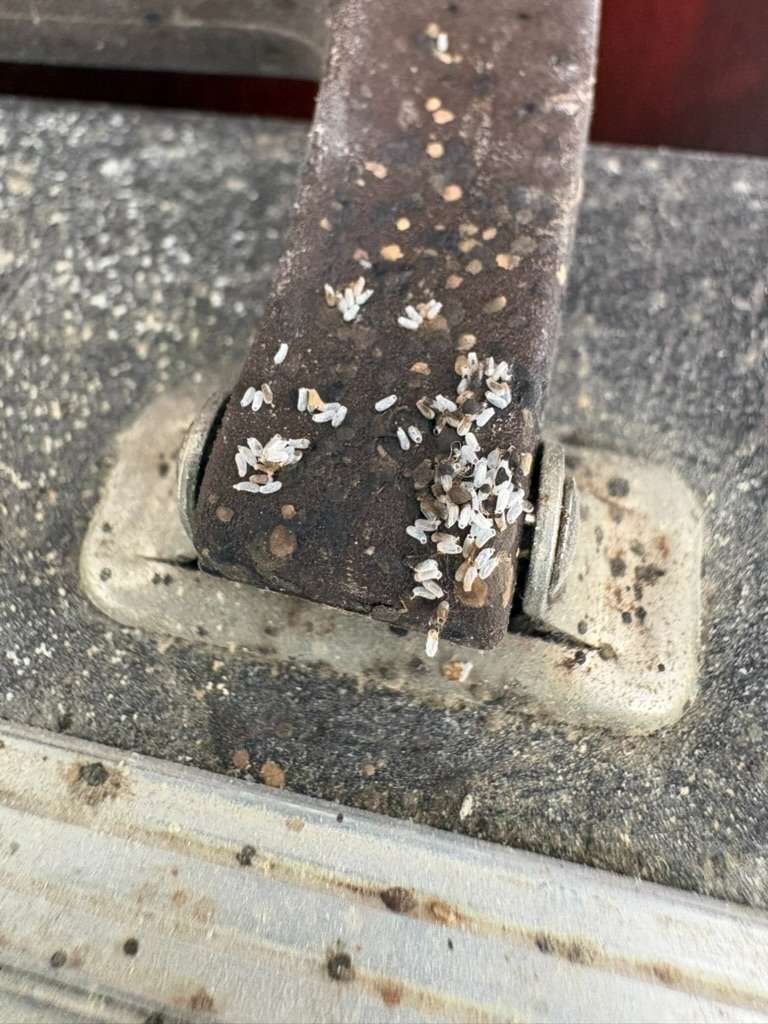
Let’s start inspecting
- Bed frame and headboard: Use a flashlight to inspect all inner corners and edges of the bed frame, including any screw holes. If there are wooden slats, lift them and check underneath. Inspect behind the headboard, shining a light into all seams, cracks, and crevices.
- Mattress: Check under all piping, handles, and labels around the entire mattress.
- Box Spring: Stand it upright against a wall and examine the underside. You will see a thin dust cover, which is a piece of fabric stapled across the bottom. Using a bright flashlight, carefully inspect around all seams and staples.
- Baseboards near the bed: Look along the edges where the wall meets the floor. If the floor is carpeted, press gently near the wall with your hand to expose hidden areas along the baseboard.
- Other furniture: Similarly, use a flashlight to check all edges, seams, cracks, and screw holes of the furniture, any area that could provide a dark and hidden spot for the bugs.
Review what you have found
- You found some evidence of bed bugs but are unsure: Take a picture and text it to our bed bug experts at 416-451-7659 to confirm. We will respond to you immediately and at no charge.
- You are certain you found evidence of bed bugs: Contact your landlord and inform them immediately. Do not move any of your belonging into the unit until professional help is sought.
- You did not find any evidence: Great! Ensure you follow this guide whenever buying any used furniture or moving into a new place in the future.

